Wildlife & Birding
Dandeli sits within a wider forest landscape that stretches into the Kali Tiger Reserve and Anshi National Park — one of the richer wildlife areas in the Western Ghats. The species below have been recorded across that broader landscape, not guaranteed at any single property or on any single visit.
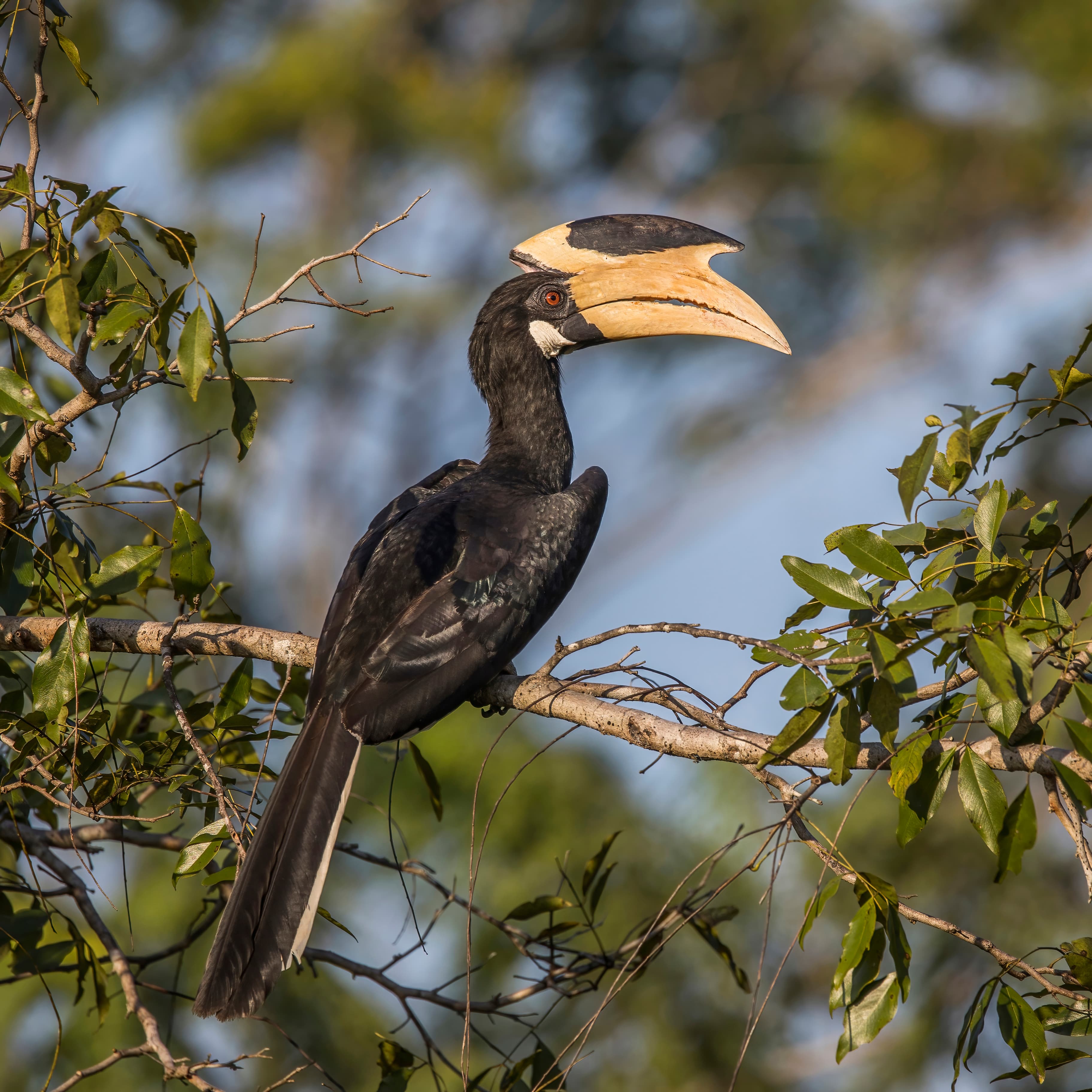 Charles J. Sharp, CC BY-SA 4.0, via Wikimedia Commons
A note before the species lists
There is no way to guarantee sightings of tigers, leopards, elephants, hornbills, or any other wild animal. This is a real, wild landscape, not a managed park — sightings depend on season, weather, habitat use, patience and a good deal of chance. Many guests see deer, langurs, giant squirrels and a wide range of birds; fewer see the rarer, larger species. Come for the forest itself, and treat any sighting as a bonus, not an expectation.
Mammals of the wider landscape
Recorded across the Kali Tiger Reserve and adjoining forest, not specific to the camp itself.
- Bengal tiger
- Black panther (melanistic leopard)
- Indian elephant
- Indian bison (gaur)
- Sloth bear
- Dhole (Indian wild dog)
- Barking deer, spotted deer, sambar
- Malabar giant squirrel
- Indian pangolin
- Civets and mongooses
Birds of the wider landscape
Over 200 species have been recorded across the reserve as a whole.
- Great Pied Hornbill
- Malabar Pied Hornbill
- Crested Serpent Eagle
- Brahminy Kite
- Peregrine Falcon
- Yellow-footed Green Pigeon
- Over 200 recorded species across the wider reserve
Ethical wildlife viewing & birding etiquette
Whether you’re on a guided forest walk, a river safari, or simply birding near camp, the same ground rules apply:
- Keep a respectful distance from all wildlife, wild or habituated.
- No camera flash or spotlights around animals.
- Never feed wildlife — it changes their behaviour and creates risk for future visitors.
- Stay with your guide and on the agreed route; do not wander off at night.
- Keep voices low and movements slow, especially near water sources at dawn and dusk.
- Pack out everything you bring in; do not leave food waste or plastic on trails.
- Follow all forest department and guide instructions without exception.
For birding specifically, this means resisting the urge to play call playbacks to draw birds in, keeping groups small and quiet near nesting or feeding areas, and letting your guide set the pace and distance.
Go deeper
Read more about the reserve itself, or see how guided safaris and birdwatching outings are arranged as part of a stay.